Discover the wildlife and plants living in our biodiversity reserves
I'm here to answer your questions! 🐜
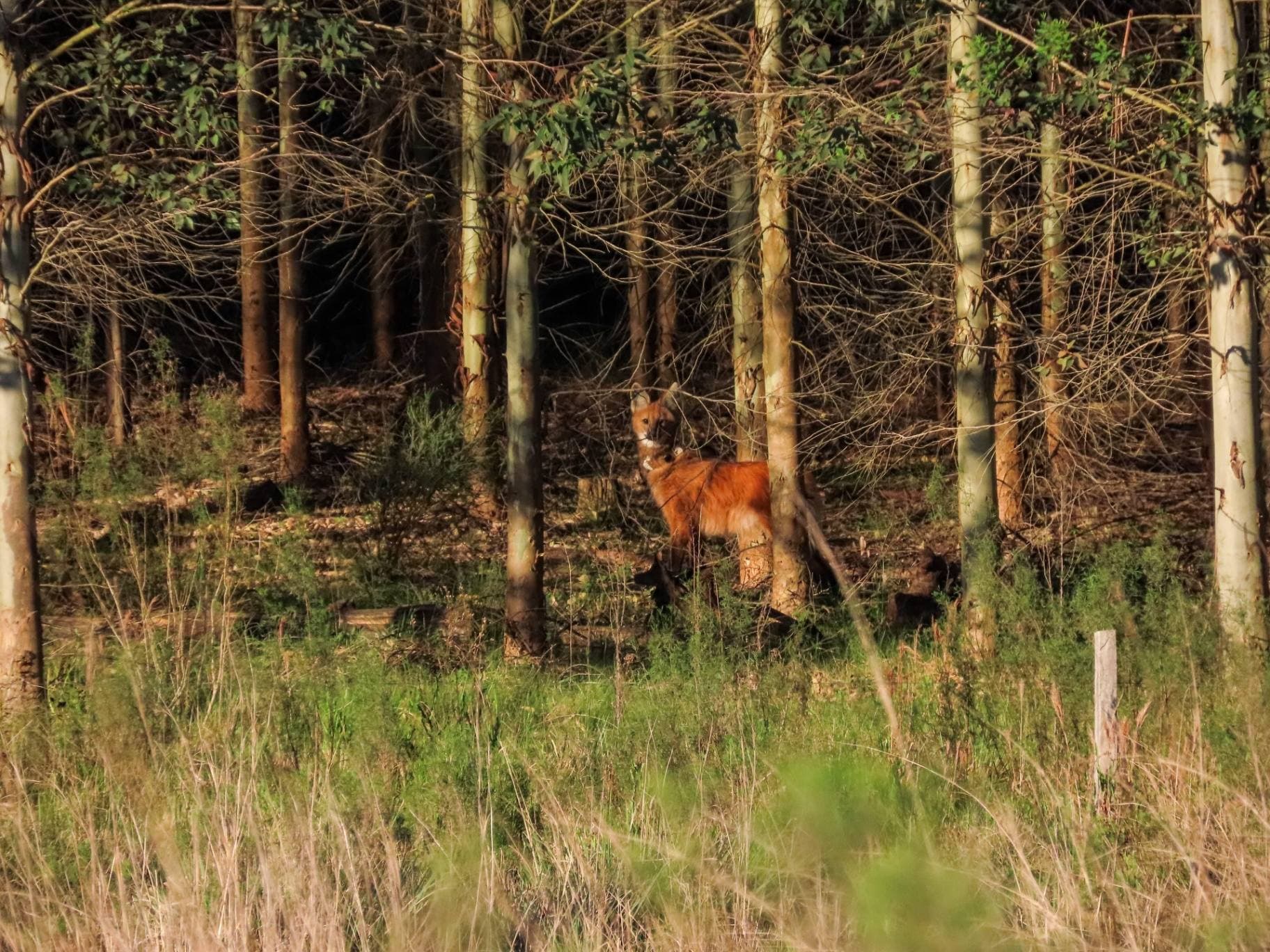
Chrysocyon brachyurus
[Pending: detailed description of the Maned Wolf. It is the largest canid in South America, characterised by its long legs and reddish coat. It is endangered in Uruguay.]
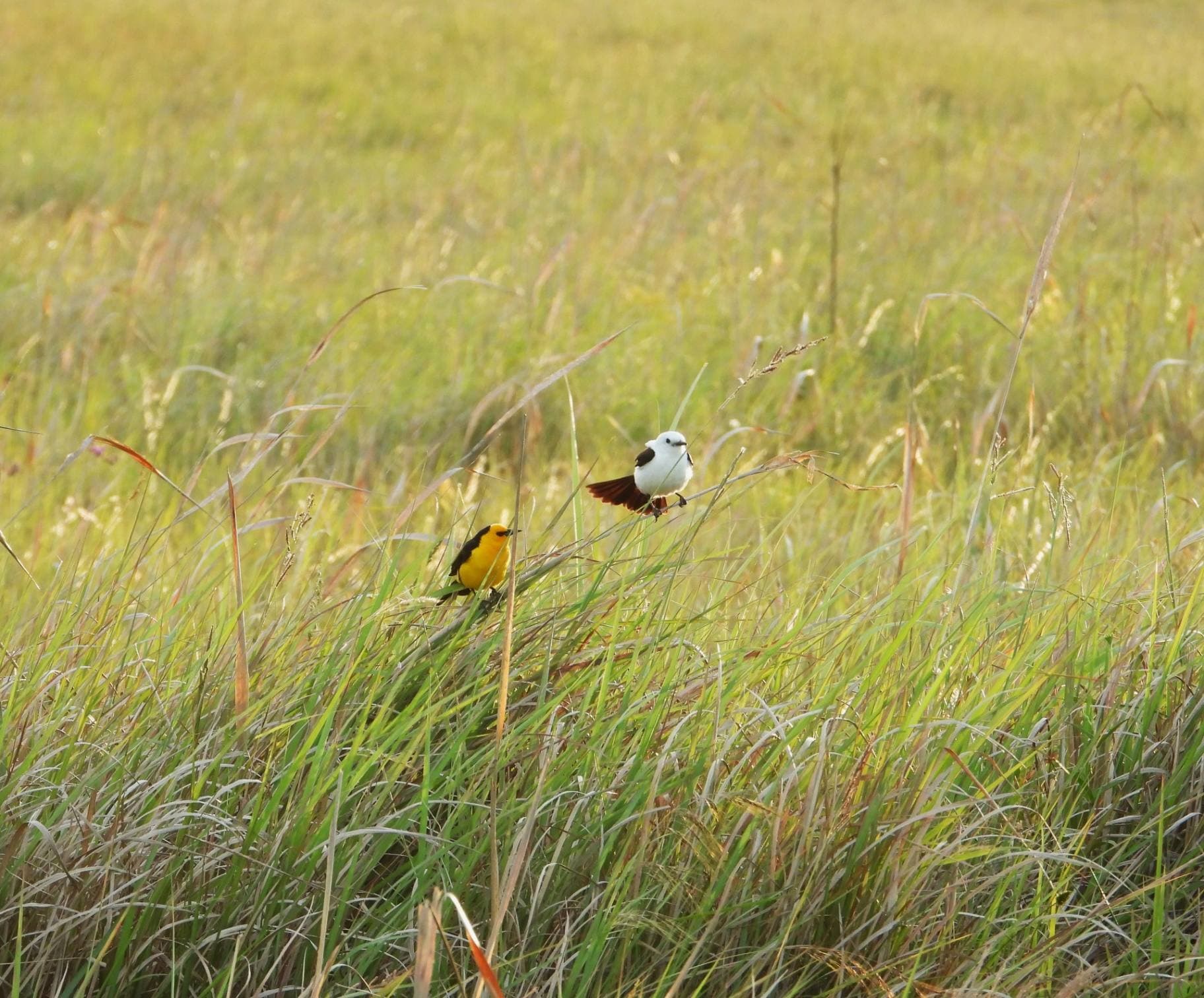
Xanthopsar flavus
A yellow bird with a black head and back, which lives in flocks and inhabits humid natural grasslands. In Uruguay the Saffron-cowled Blackbird is endangered owing to the loss of grasslands and the drainage of wet areas, so conserving these environments is essential for its survival.
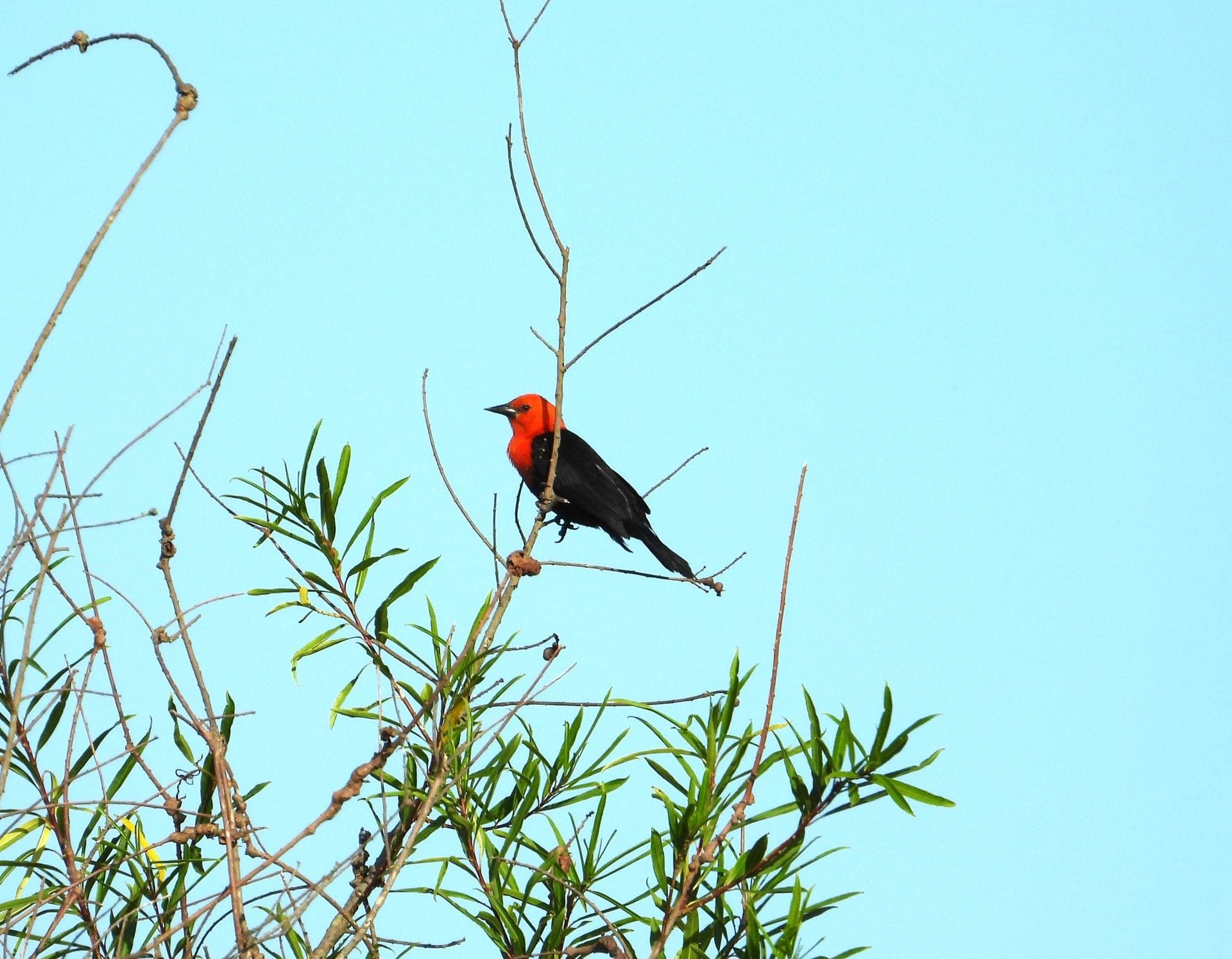
Amblyramphus holosericeus
The Scarlet-headed Blackbird is a black bird with an intense red breast. It lives in marshes, swamps and tall grasslands. Its main threats are wetland drainage, fires and the loss of tall grasslands. If it is spotted, avoid burning in wet areas and tall grasslands.
Cistothorus platensis
A very small bird with streaked brown plumage and a high-pitched song. It inhabits tall grasslands. Its main threats are burning, overgrazing and the loss of grasslands. It is recommended to avoid burning and abrupt grassland management.
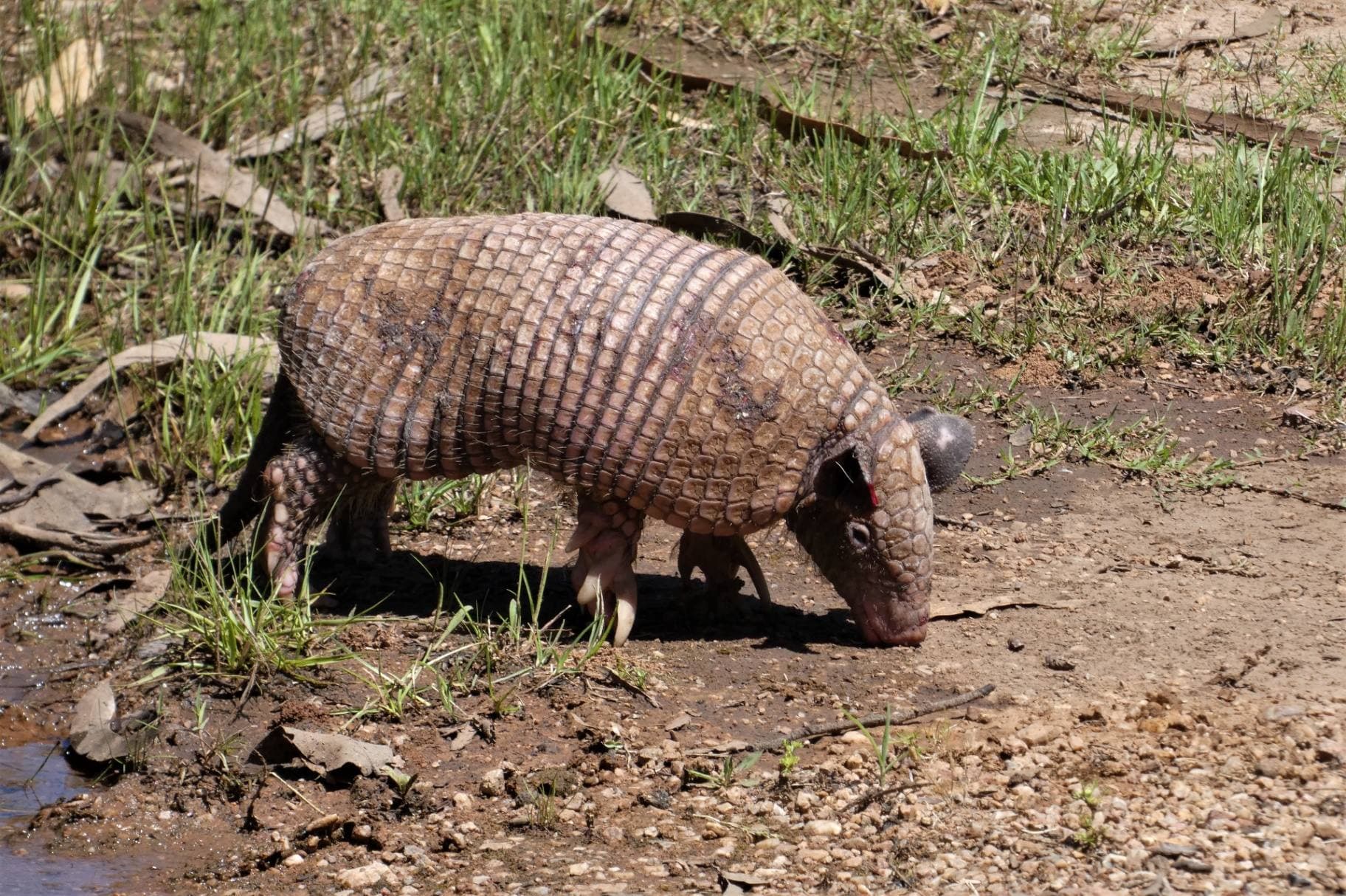
Cabassous tatouay
A medium-sized armadillo, known in English as the greater naked-tailed armadillo, with a dark shell, an elongated snout and a soft tail bearing few plates. It lives in grasslands, native forest and loose soils in the east and north of the country. Its main threats are hunting, roadkill and habitat loss. To protect it, it must not be hunted or disturbed, and its burrows must not be destroyed.
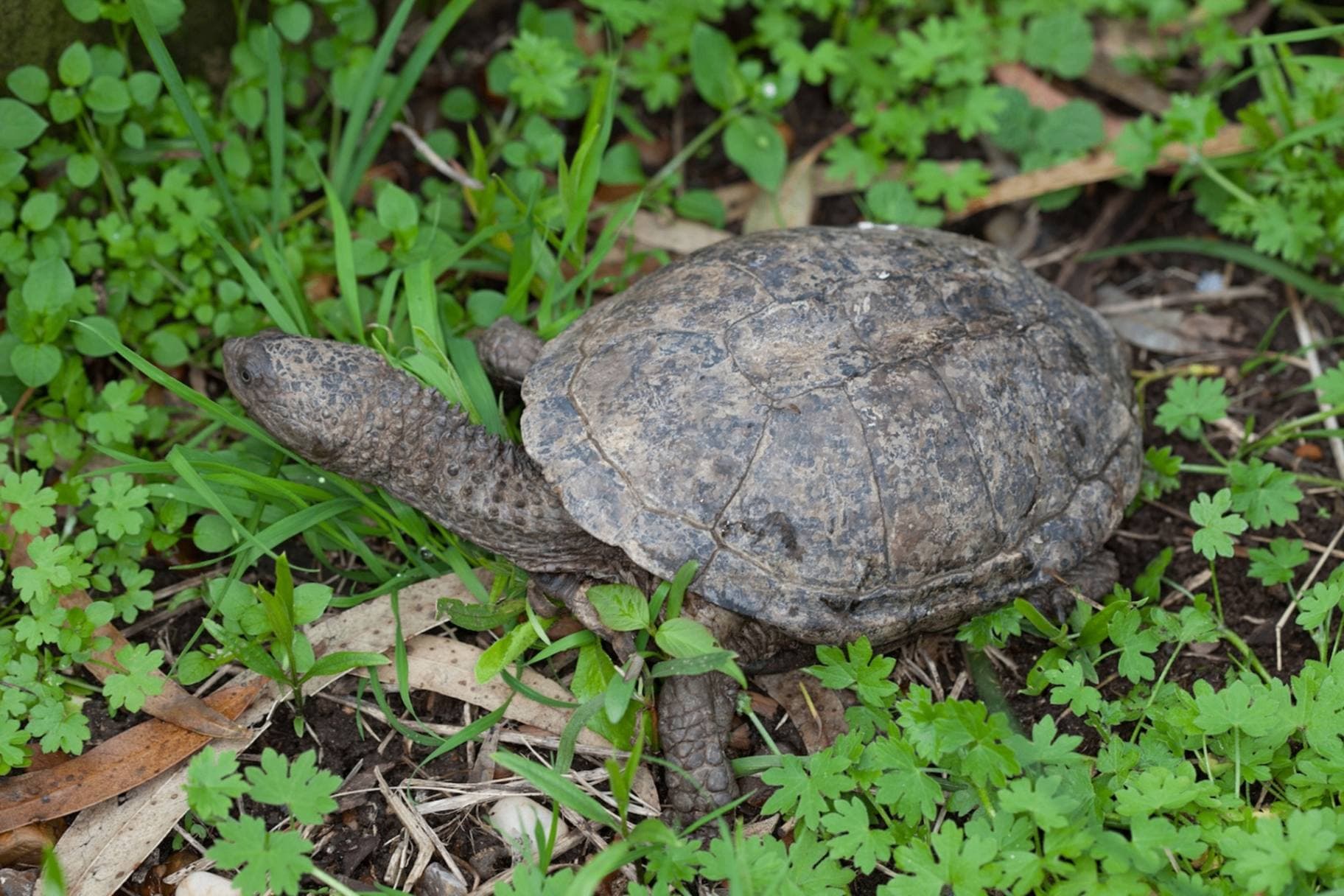
Acanthochelys spixii
A small turtle (17-20 cm) with a dark, low shell, which lives in aquatic environments such as marshes, ponds and shallow lagoons. Its main threats are the destruction of wetlands, road kills and capture. If you come across one, we recommend that you do not take it out of the water or move it elsewhere.
Volatinia jacarina
A small bird. The male is a glossy blue-black. It rises and falls in short flights while singing. It inhabits grasslands, open fields and roadsides. Its main threats are the loss of grasslands and the intensive use of agrochemicals. Maintaining grasslands and natural field margins favours its presence.
Leopardus wiedii
A cat similar in size to a domestic cat, with a very long tail, large eyes and excellent climbing ability thanks to its hind legs, which are adapted to life in the trees. It lives in native forests and gallery forests in the north and east of Uruguay. Its main threats are dog attacks, the loss of native forest and road collisions. Conserving the forest is key to its survival.
Tamandua tetradactyla
The tamandua or southern tamandua is one of the world's most ancient placental mammals, with origins dating back twelve million years. In Uruguay, although it had been theoretically known as part of the country's native fauna since the early twentieth century, it was not seen in the wild until recent times. Today it mainly inhabits the native forests of north-eastern Uruguay, especially in Cerro Largo, Rivera, Tacuarembó and Artigas.
Heteroxolmis dominicana
A small black-and-white bird that often perches on wire fences or posts. The Black-and-white Monjita is one of the most threatened birds in Uruguay. It lives in natural grasslands. Its main threat is the loss of natural grasslands and changes in land management. Conserving natural grasslands is key to its survival.
Atta vollenweideri
Sporophila cinnamomea
A small grassland passerine
Leopardus munoai
A small wild cat endemic to the grasslands
Ctenomys rionegrensis
Subterranean rodent endemic to the department of Río Negro, with a very restricted distribution
Leaf-cutter ant
Chloraea bella
A terrestrial orchid native to the grasslands
Eugenia anomala
A native creeping shrub of Uruguay, a wild relative of the common ubajay. The ubajay rastrero grows close to the ground, forming dense green mats. It produces small, edible orange fruits that are highly prized by native wildlife. Its leaves are small, glossy and evergreen. This species is important for soil conservation in hilly and stony areas, and its fruits are eaten by native birds and mammals.
Limnoctites sulphuriferus
A small bird of wetlands and tall grasslands, with distinctive ochre plumage. Known in English as the Sulphur-bearing Spinetail.
Cygnus melancoryphus
An elegant waterbird with a black neck
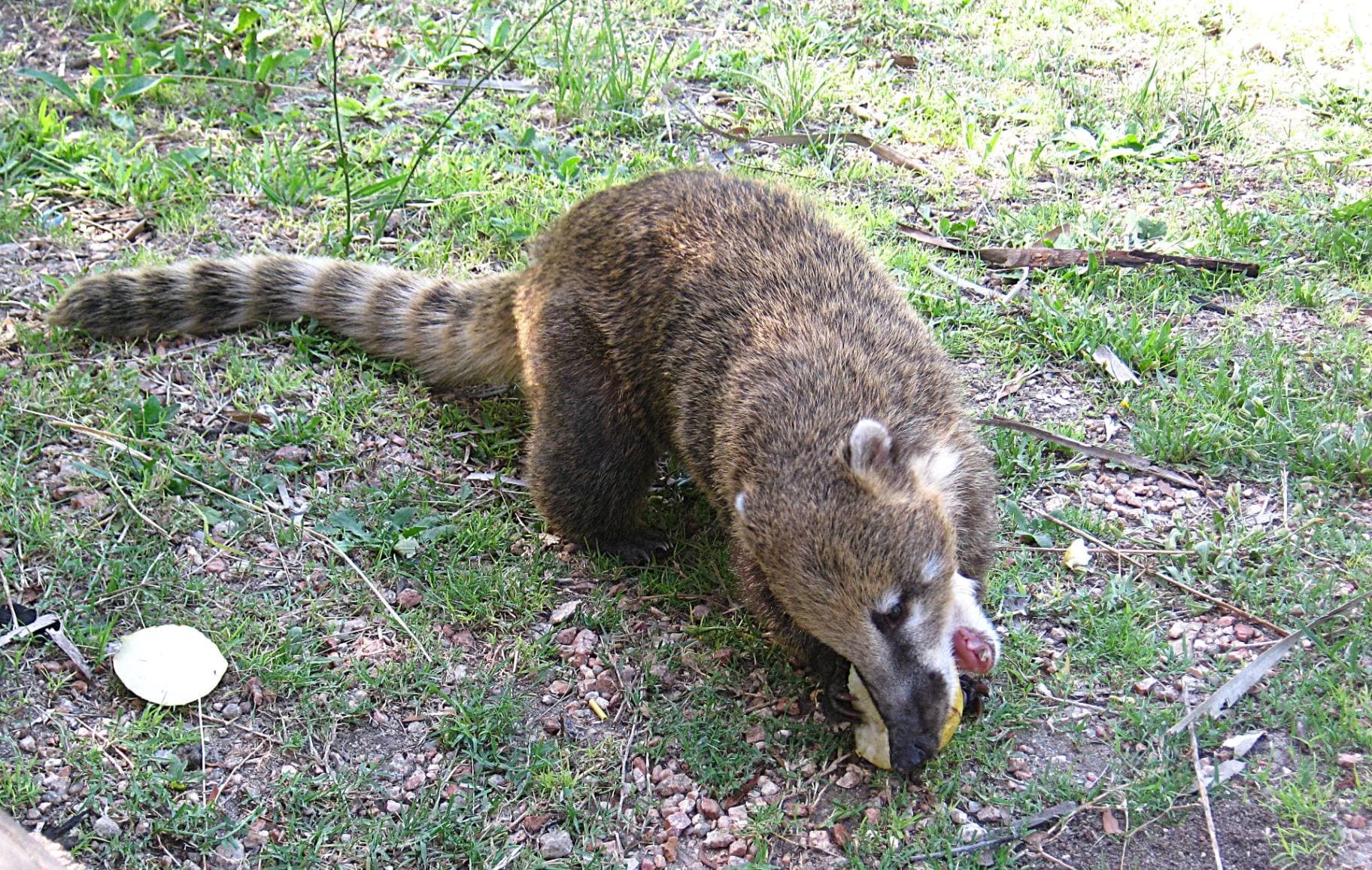
Nasua nasua
Similar in appearance to a raccoon, with dark fur across the face like a mask and a long tail ringed in light and dark bands. It may be seen alone or in groups, and it inhabits native forest, riverside gallery forest and wooded areas, where it is often spotted climbing trees, including eucalypts. Its main threats are hunting, road collisions and conflicts with dogs. It should not be fed, nor should dogs be used to drive it away.
Buteogallus urubitinga
A large bird of prey that inhabits wetlands and forests
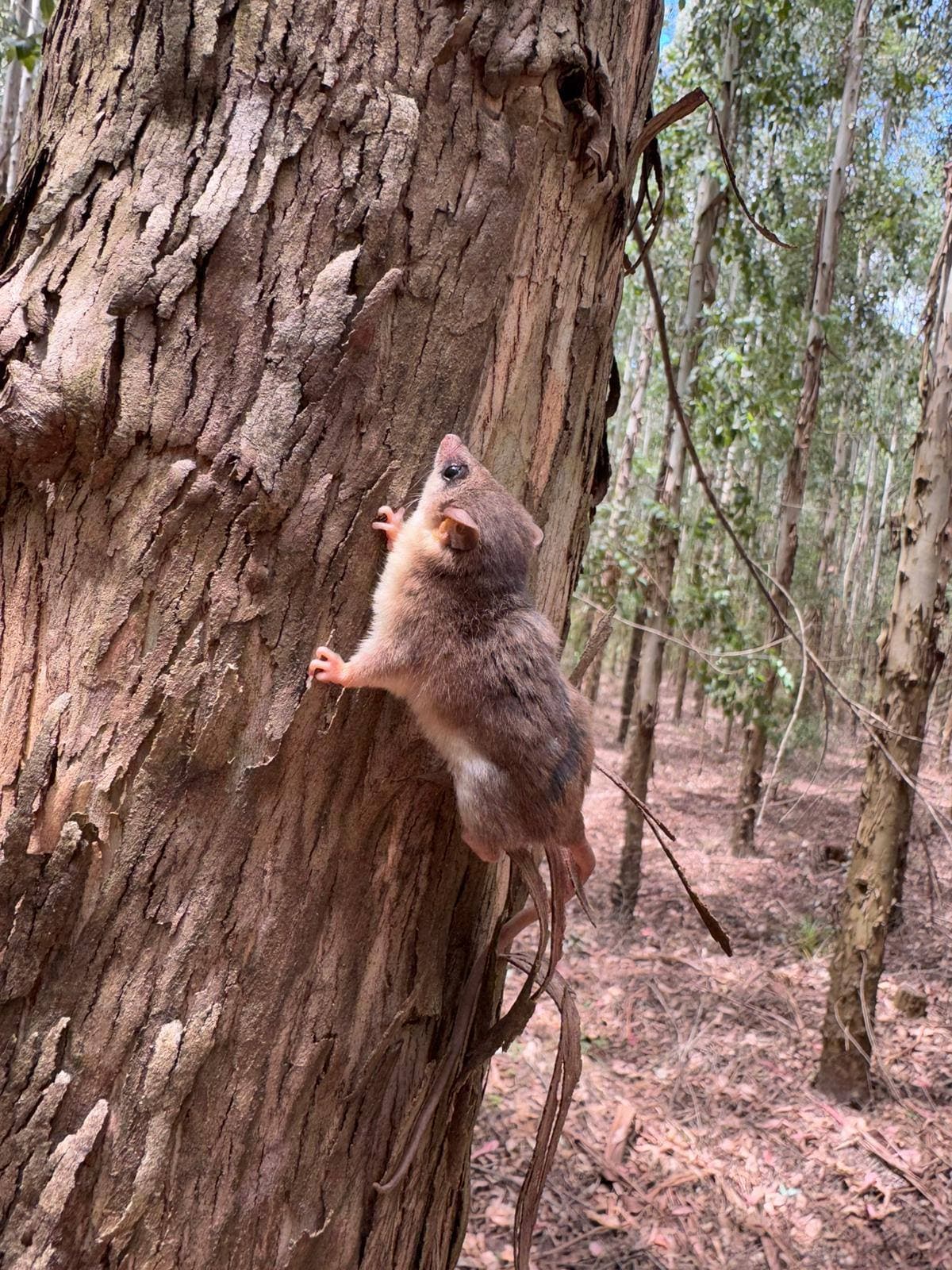
Cryptonanus chacoensis
Very small and hard to spot. It looks like a mouse, but it is in fact a marsupial: its young are born barely developed and complete their growth in the pouch. Nocturnal in habit, it lives in natural grasslands, forests and little-disturbed fields, mainly along the west of the country. It is an indicator of well-conserved environments. Its main threat is the loss of grasslands and the intensive use of agrochemicals.
Neltuma affinis
A mesquite species found in parkland forests
Oreopholus ruficollis
A medium-sized, long-legged bird with mottled brown plumage. It runs more than it flies. It is migratory: it travels thousands of kilometres. It inhabits natural grasslands and open fields. Its main threats are the loss of grasslands and disturbance during breeding.
Stilpnia preciosa
A brightly coloured bird typical of riparian forests
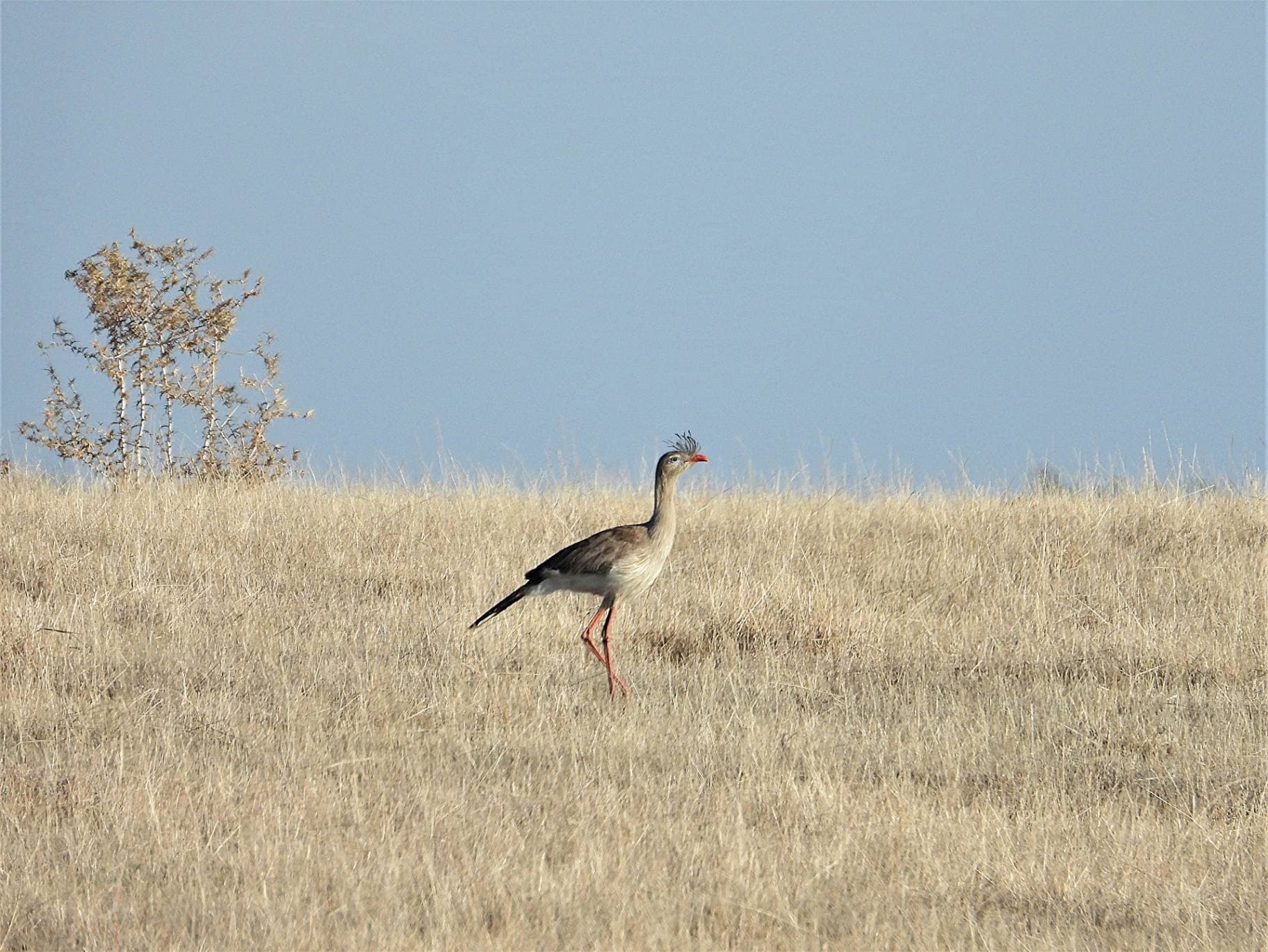
Cariama cristata
A large, long-legged bird with greyish plumage and a distinctive crest on its head. The Red-legged Seriema walks more than it flies and can reach great speeds when running, which is why some people call it "the local roadrunner". Its call is also very peculiar and is often compared to a "burst of laughter". It inhabits open fields and grasslands. Its main threats are the loss of natural grasslands and direct persecution. It is a protected species, so it should not be disturbed or chased.
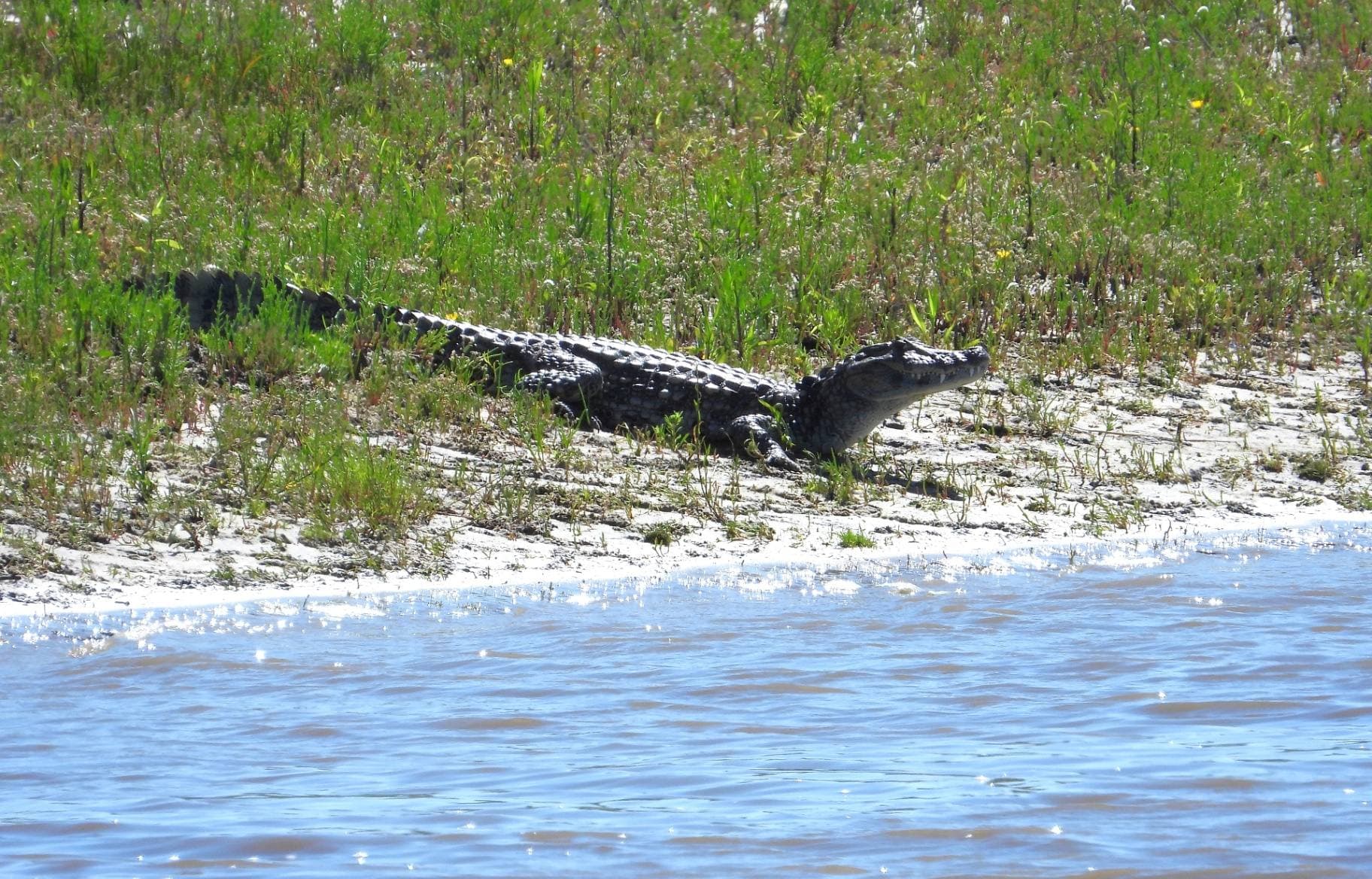
Caiman latirostris
A large reptile with a broad, short snout, dark in colour with pale blotches. It inhabits slow-flowing rivers, lagoons, marshes and wetlands in the litoral and north of the country. Its main threats are illegal hunting, the destruction of wetlands, road deaths at crossings and killing out of fear. If you come across one, it is advisable to keep your distance, not to try to scare it away or capture it, and to notify the environmental officer.
Coscoroba coscoroba
A large, entirely white bird with a pink bill and an elegant, long-necked flight. The Coscoroba Swan lives in lagoons, marshes, swamps and wetlands. Its main threats are the drainage and degradation of wetlands, human disturbance during breeding and illegal hunting. Protecting wetlands is essential for its survival.
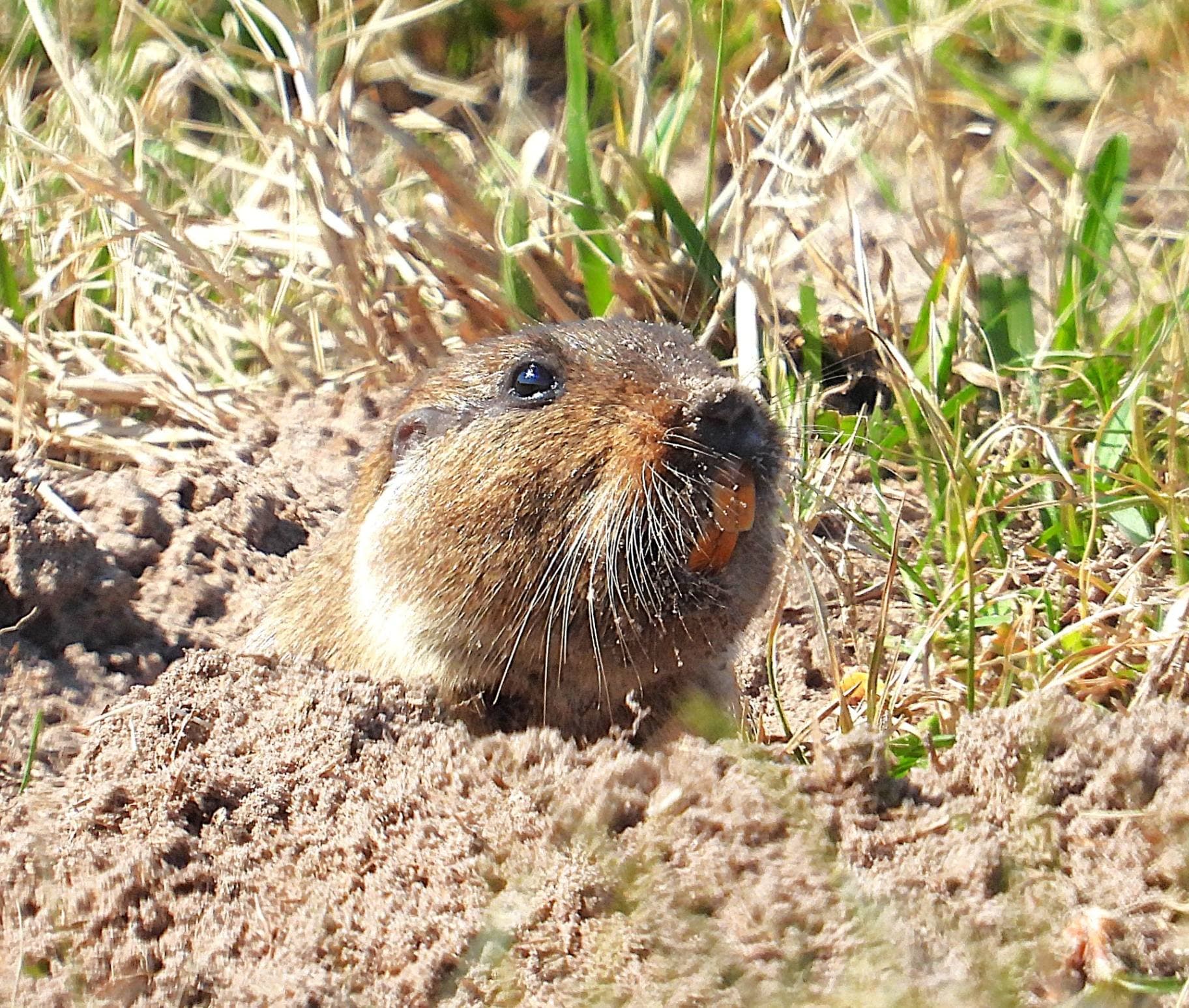
Ctenomys spp
A medium-sized rodent that lives almost entirely underground. Its presence is detected by the mounds of fresh earth it leaves on the surface, and it is rarely seen with the naked eye. Some species are restricted to very small areas, such as the Río Negro tuco-tuco. It inhabits natural grasslands and sandy soils, where it aerates the soil and favours grassland diversity. Its main threats are direct persecution, soil compaction and the transformation of the grassland.
Gubernatrix cristata
A medium-sized, intensely yellow bird with a crested head and a loud, clear song. It is one of the most threatened birds in Uruguay. It lives in open woodland, thorn scrub and forest edges. Its main threats are illegal capture for the pet trade and habitat loss. Wild birds should never be captured or bought.
Leopardus geoffroyi
A medium-sized wild cat with yellowish fur marked with black spots. A melanistic variant with black fur also occurs. The tail is relatively short. It lives mainly in open woodland and scrubland across almost the whole country. Its main threats are road collisions, hunting and persecution, and attacks by dogs. Not to be confused with feral domestic cats.
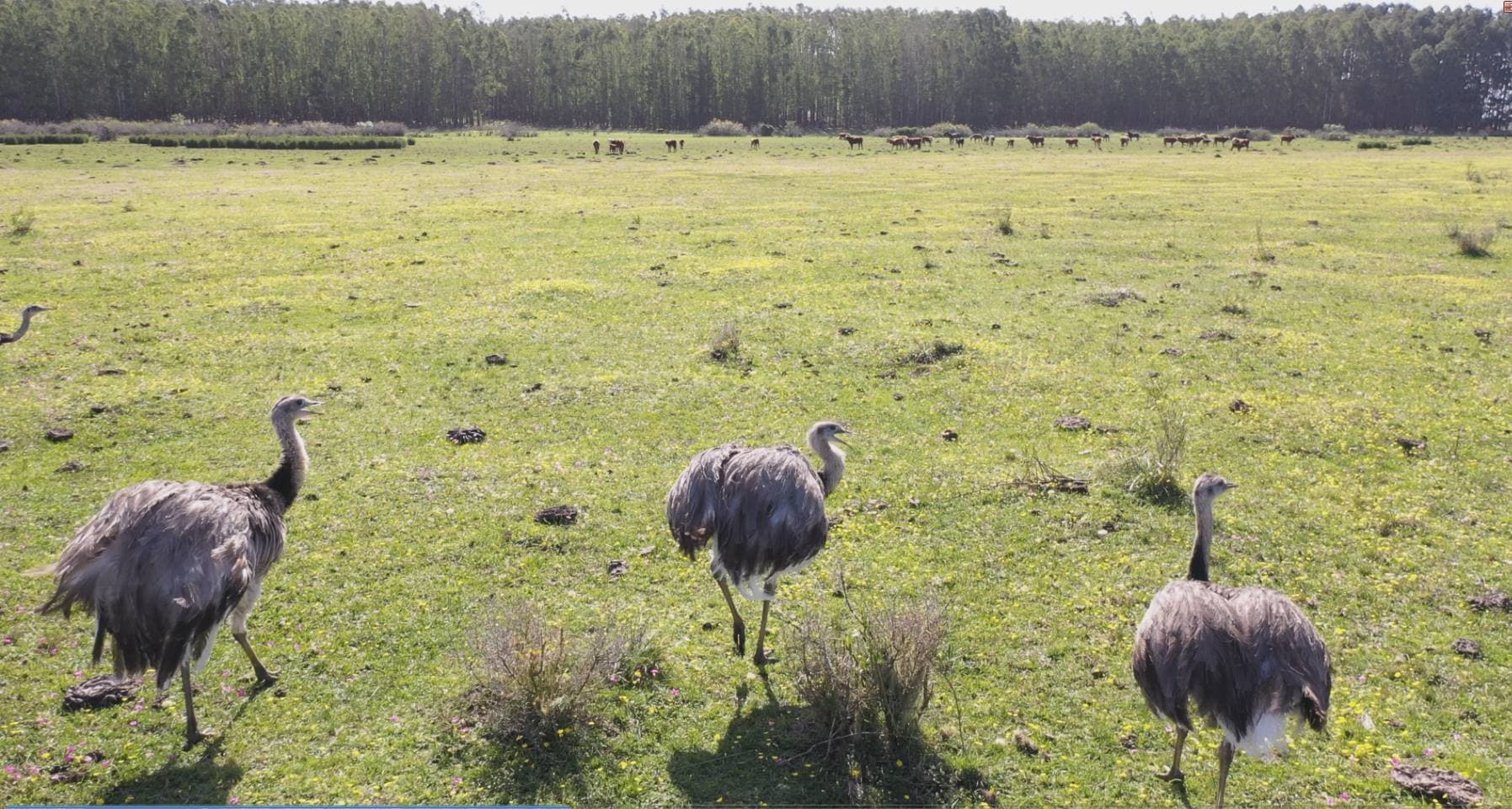
Rhea americana
A very large, flightless bird with a long neck and long, strong legs. Plumage greyish to brown. It runs at great speed. It nests in grassland, but nests have also been found in eucalyptus plantations. A clutch may contain up to 20 eggs. Its main threats are illegal hunting, habitat fragmentation, wire fences, road collisions and the destruction of nests. They should not be hunted or chased with vehicles.
Dasypus septemcinctus
A small armadillo with a segmented shell bearing seven bands, a slender snout and short legs with strong claws for digging. It is generally active during the day. It lives in natural grasslands, grasslands and firebreaks. Its main threats are road kills, hunting, habitat loss and persecution driven by popular beliefs. Slowing down on rural roads saves native wildlife.
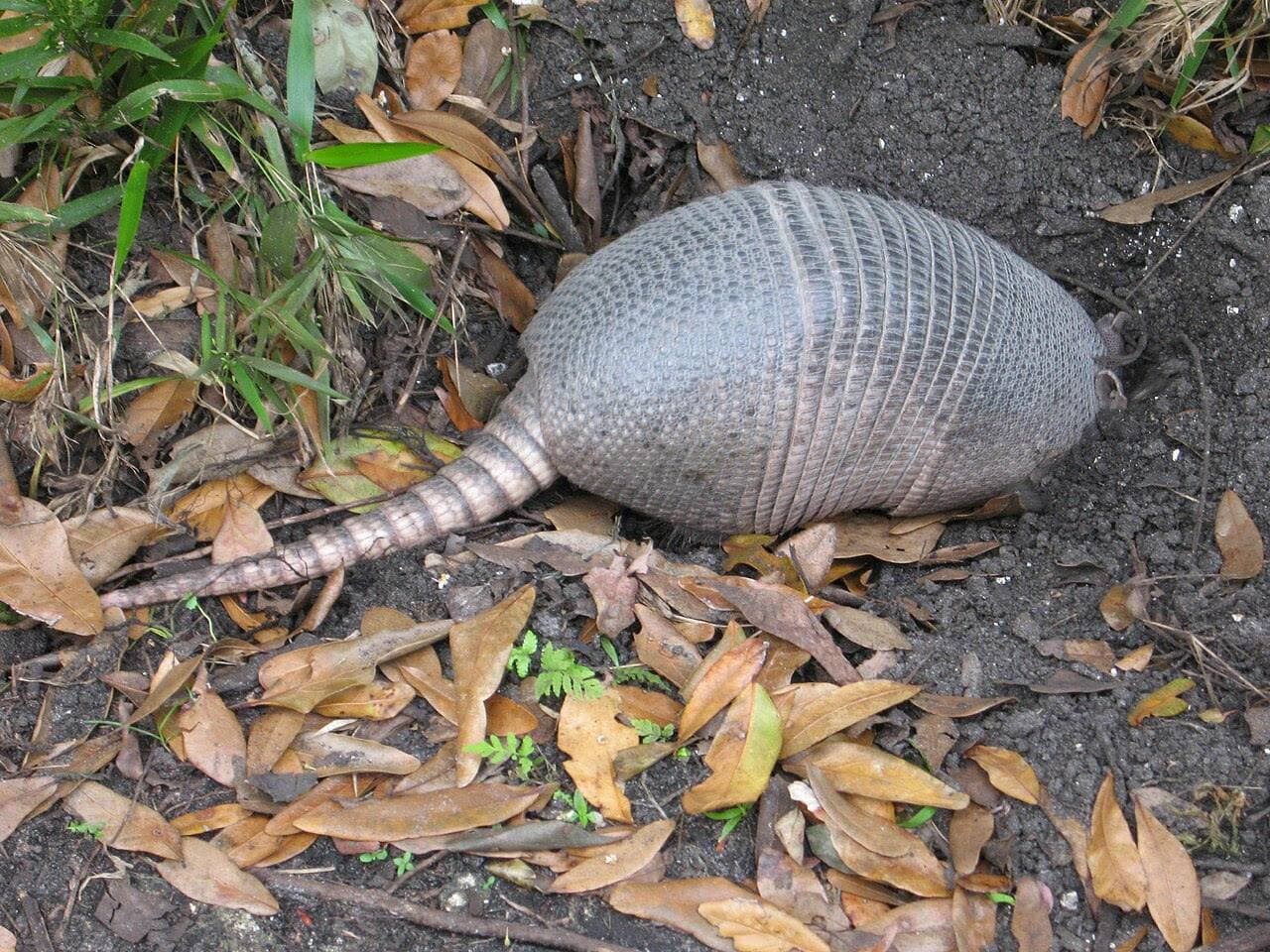
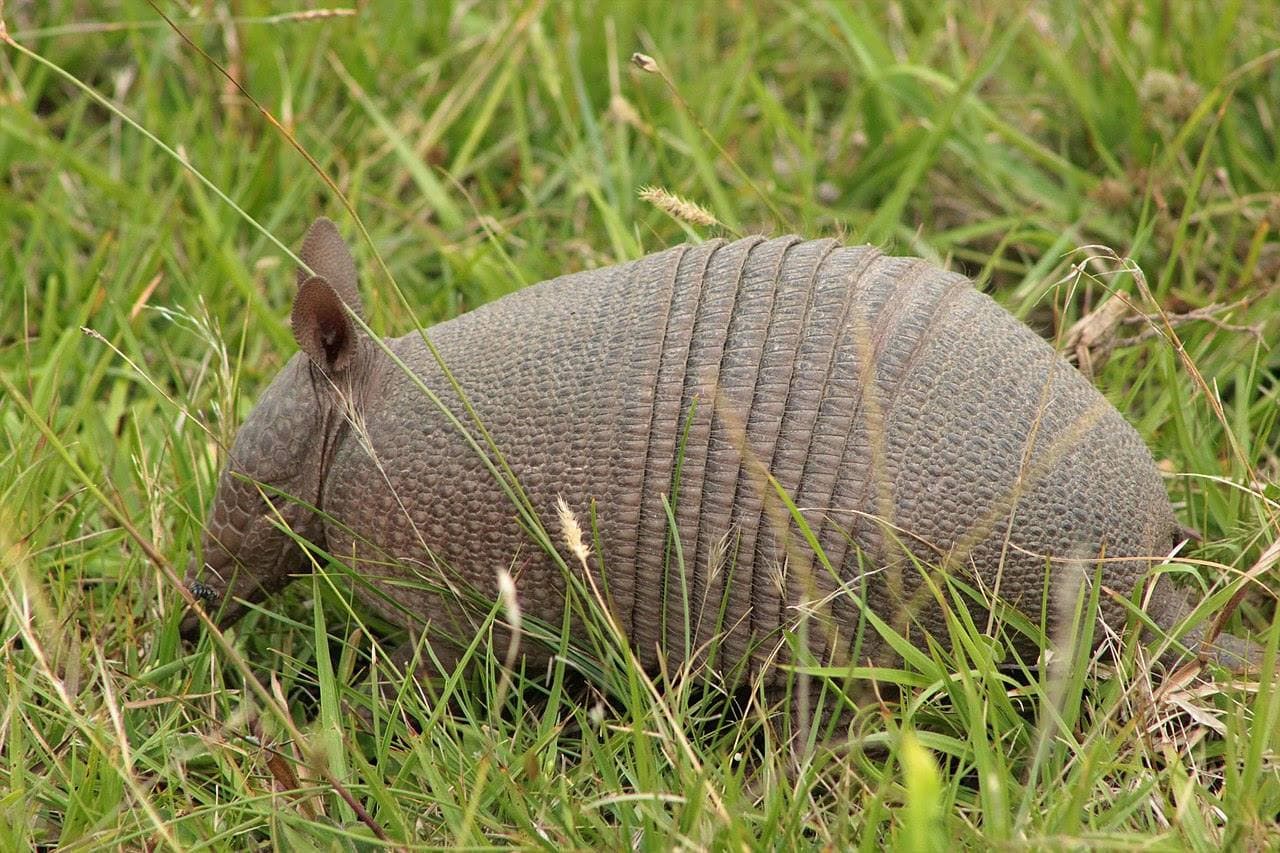
Dasypus novemcinctus
A medium-sized armadillo, larger than the southern long-nosed armadillo, with a shell bearing nine clearly marked bands. It has a long tail and a great capacity for digging. Generally active at night. It inhabits natural grasslands, native forests, rural areas and peri-urban environments. Its main threats are road kills, hunting, habitat destruction and persecution by humans. These animals play a key ecological role by turning over soils and controlling insects.
Bothrops alternatus
A robust snake that can measure between 80 and 120 cm, with some individuals exceeding 2 m. It has a triangular head with a pale cross- or anchor-shaped marking. Its dorsal pattern consists of dark "C"-shaped blotches with pale edges. Found throughout the country, it is most common in tall grasslands, grasslands, marshes, swamps and plantations. It is not formally threatened, but it is often killed as a result of human persecution. It plays an important role in the ecosystem by feeding on mice and other rodents. Venomous snake: do not disturb it, move away and inform trained personnel.
Bothrops pubescens
Greyish brown background colour with dark brown trapezoidal blotches edged in whitish. In some individuals the lateroventral area is a pale salmon tone. Smaller and more slender in appearance than B. alternatus. It is distributed in the east and north-east of the country. It inhabits hill ranges, stony areas, damp places and piles of wood or dry logs. It is one of the two species responsible for most snakebite accidents in Uruguay. It plays an important role by feeding on mice and other rodents.